
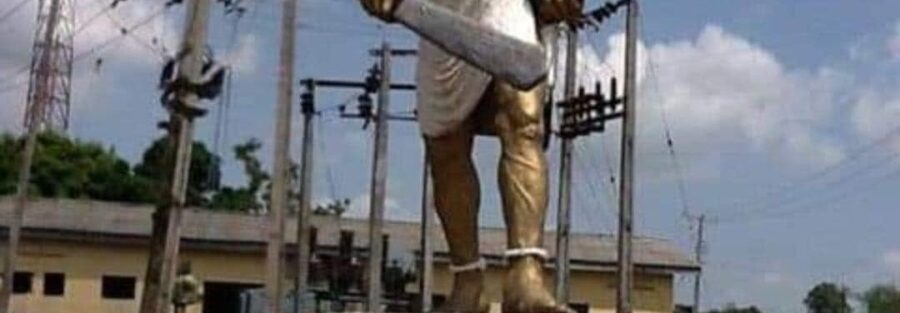
Ibusa, officially known as Igbuzo, is a historically rich Igbo community situated in the Oshimili North Local Government Area of Delta State, Nigeria. Located just a few miles west of the capital city of Asaba, Ibusa stands as a prominent pillar of the Anioma cultural region—the Igbo-speaking population living west of the Niger Basin.
Founded around 1450, Ibusa boasts a population and a legacy that beautifully balances deep ancestral roots with remarkable contributions to modern Nigerian literature, education, and civil service.
The Genesis: A Bipartite Federation
The foundational history of Ibusa is a classic example of a dual social structure formed by two distinct waves of migration from the east bank of the River Niger.
* The First Wave (Edini): Led by Edini, an adventurer from the ancient Nshi (Nri) kingdom, who crossed the Niger and settled in the area.
* The Second Wave (Umejei): Led by Prince Umejei from Isu (near modern-day Awka). Oral tradition holds that Umejei inadvertently killed an opponent during a wrestling match. To avoid execution, he was exiled by his father, given a sacred charm pot, and instructed to settle wherever the pot dropped. It fell at Ani Ohe in present-day Ibusa.
Over centuries, the descendants of Umejei and the nearby settlement of Ogboli (linked to the migrations of Edini and Odaigbo) merged. This fusion birthed a unified, autonomous federation known today as Igbuzo—meaning “Igbo bi n’ụzọ” or “Igbos who settle along the way.”
Governance and Social Structure
Ibusa’s leadership relies on a unique blend of monarchical tradition and an unwritten democratic constitution. The community is led by the Obuzor of Ibusa, the supreme traditional ruler whose title translates directly to “the first” or “number one.”
Historically, the town was also governed by highly organised structures like the Anikanmadu, a pre-colonial secret executive organ that enforced community decisions, preserved societal laws, and maintained communal sovereignty. Structurally, the town is divided into several historic quarters (such as Umueze, Umuekea, Umuodafe, and Ogboli), ensuring represented local leadership and administrative balance.
Language and Daily Life
The people of Ibusa speak Enuani, a melodic dialect of the Igbo language family.